
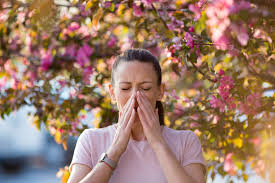
What is the difference between hay fever and histamine intolerance?
These two conditions share many symptoms — sneezing, itchy eyes, headaches, skin flushing, and fatigue — but their root causes are different, and confusing them leads to ineffective management.
Hay fever (allergic rhinitis) is an immune system overreaction to airborne allergens, most commonly grass pollen, tree pollen, and mould spores. When pollen contacts the nasal lining, the immune system releases histamine as part of its defensive response — and it is that histamine flood that produces your symptoms.
Histamine intolerance, by contrast, is not an allergy at all. It occurs when the body accumulates more histamine than it can break down — usually because of reduced activity of the enzyme diamine oxidase (DAO), which is responsible for degrading histamine in the gut. In warm weather, this problem compounds: heat accelerates histamine release in both food and the environment, while high pollen seasons keep baseline histamine levels chronically elevated.
Why does warm weather make histamine reactions worse?
Several mechanisms converge in warm weather to drive histamine levels higher:
- Pollen counts peak in late spring and summer, dramatically increasing inhaled allergen load and immune-driven histamine release.
- Heat causes mast cells — the immune cells that store histamine — to degranulate more readily, releasing histamine even without a clear allergen trigger.
- Warm weather accelerates bacterial fermentation in foods, raising the histamine content of leftovers, aged cheeses, cured meats, alcohol, and fermented products.
- Increased sun exposure can trigger UV-induced mast cell activation in sensitive individuals, worsening skin and systemic symptoms.
- Dehydration — common in hot weather — thickens mucous membranes and reduces the body’s ability to clear both histamine and allergens efficiently.
How can you minimise pollen exposure on high-count days?
Environmental control is the first line of defence and the most immediately actionable. The following measures are evidence-supported and practical for everyday life in the UK:
- Check the daily pollen forecast at the Met Office or a pollen-tracking app before spending time outdoors.
- Keep windows and doors closed between 5am–10am and 5pm–7pm — the two daily peaks when pollen counts are highest.
- Shower and change clothes immediately after returning indoors to remove pollen from hair and skin before it reaches your mucous membranes.
- Wear wraparound sunglasses outdoors to reduce pollen contact with eyes.
- Apply a small amount of petroleum jelly or a specialist pollen barrier balm around the inside of the nostrils to trap pollen before inhalation.
- Avoid drying bedding or clothing outside on high-pollen days.
- On very high-count days, exercise indoors or reschedule outdoor activities to early morning after rainfall, when pollen has been suppressed.
What is a low-histamine diet, and does it help hay fever?
A low-histamine diet reduces the total histamine burden your body must process at any one time. During hay fever season, when immune-driven histamine is already elevated, dietary histamine adds to an already full “histamine bucket.” Lowering dietary intake prevents that bucket from overflowing into symptoms.
The key principle is to distinguish between foods that are naturally high in histamine and foods that are histamine liberators — substances that trigger your body to release its own stored histamine even if they contain little themselves.
| Food category | High histamine — limit or avoid | Low histamine — generally well tolerated |
|---|---|---|
| Dairy | Aged cheeses, yoghurt, sour cream | Fresh milk, butter, mild cream cheese |
| Protein | Smoked fish, canned tuna, processed meats | Fresh chicken, fresh fish (cooked same day) |
| Fruit | Strawberries, citrus, tomatoes, avocado | Apple, pear, mango, blueberries, melon |
| Vegetables | Spinach, aubergine, fermented veg | Broccoli, courgette, sweet potato, leafy greens |
| Drinks | Red wine, beer, kombucha, energy drinks | Water, herbal teas (except nettle), chamomile |
| Condiments | Vinegar, soy sauce, ketchup, hot sauces | Fresh herbs, mild olive oil, coconut aminos |
Which natural supplements can help reduce histamine and hay fever symptoms?
Several well-researched natural compounds help either block histamine’s effects, accelerate its breakdown, or stabilise the mast cells that release it. Taken consistently from 4–6 weeks before pollen season, these can substantially reduce symptom severity:
- Quercetin — a flavonoid found in onions and apples, quercetin is one of the most potent natural mast cell stabilisers identified in research. It inhibits histamine release before it occurs, rather than simply blocking its effects after the fact.
- Vitamin C — acts as a natural antihistamine by supporting the enzyme pathways that break down circulating histamine. Studies suggest doses of 2g daily can reduce blood histamine levels meaningfully during allergy season.
- DAO enzyme supplements — diamine oxidase (DAO) supplements, taken before meals, help restore the gut’s capacity to break down dietary histamine — particularly useful for those with histamine intolerance rather than pure allergy.
- Stinging nettle leaf extract — a traditional antihistamine supported by clinical trial data showing reduced sneezing and nasal irritation compared to placebo.
- Omega-3 fatty acids — reduce the inflammatory cascade that amplifies allergic symptoms; most effective when taken consistently throughout spring and summer.
- Probiotics (specifically Lactobacillus rhamnosus and Bifidobacterium longum) — emerging research supports the role of gut microbiome balance in regulating histamine tolerance; certain strains actively degrade histamine in the gut.
How does gut health affect hay fever and histamine tolerance?
The gut is where approximately 70% of the immune system resides, and it is also the primary site where histamine is broken down before it enters circulation. Gut lining integrity, microbiome balance, and DAO enzyme production are all directly tied to how well your body handles both dietary and immune-driven histamine.
A compromised gut — whether from antibiotic use, chronic stress, processed food consumption, or unaddressed food intolerances — reduces DAO output and allows both histamine and undigested food particles to enter the bloodstream more easily. This heightened intestinal permeability (commonly called “leaky gut”) creates a feedback loop: more systemic histamine, a more reactive immune system, and worsening seasonal symptoms year on year.
Addressing gut health before and during hay fever season — through a gut-supportive diet, targeted probiotics, and removal of trigger foods — is therefore one of the highest-leverage interventions available for people with persistent or worsening seasonal allergies.
What lifestyle changes reduce histamine reactions in warm weather?
Beyond diet and supplements, several practical daily habits shift the body’s overall histamine tolerance in the right direction:
- Stay well hydrated — aim for at least 2 litres of water daily; histamine increases as dehydration reduces the body’s buffering capacity.
- Manage stress actively — cortisol released under chronic stress stimulates mast cells and amplifies histamine release; breathwork, meditation, or regular gentle exercise all reduce baseline cortisol.
- Prioritise sleep — histamine is also a neurotransmitter that regulates sleep-wake cycles; disrupted sleep raises histamine sensitivity and worsens daytime symptoms.
- Reduce alcohol intake — alcohol directly inhibits DAO enzyme activity and is itself a potent histamine liberator, particularly red wine and beer.
- Air-purify your home — a HEPA air purifier in the bedroom captures pollen, dust mites, and mould spores that accumulate overnight, reducing your total allergen load during the hours you spend asleep.
- Nasal rinse with saline — daily nasal irrigation with a saline solution mechanically clears pollen from nasal passages and reduces the mucosal inflammation that drives congestion and sneezing.
Frequently asked questions
The takeaway: address the whole histamine picture, not just the season
Hay fever and histamine reactions in warm weather are rarely caused by pollen alone. For the majority of sufferers, symptoms are driven by a combination of immune reactivity, dietary histamine load, gut health, stress levels, and total body burden — all of which are modifiable with the right approach.
The most effective strategy is not to simply suppress symptoms with antihistamines when they arrive, but to systematically lower your histamine baseline before the season peaks: track pollen, reduce dietary triggers, support gut DAO production, manage stress, and identify your personal food intolerances with precision testing. This approach does not just reduce symptoms for one summer — it progressively improves your histamine tolerance over time.
Suspect food intolerances are amplifying your seasonal symptoms? Total Health Now Clinic offers specialist Allergy and Food Intolerance Testing at our London clinics, using both bioresonance scanning and quantum resonance technology to identify your precise histamine and food triggers — without invasive blood tests. Our practitioners combine allergy testing with a full holistic health assessment to create a personalised plan that addresses your symptoms at the root, not just the surface. Both in-clinic and remote testing options are available.